Snakes and wildlife at the crags
Climbers put their hands into cracks, sit in the grass at the base and walk out in the dark. This page shows the four snakes that cause most of the deaths in India, then leopards, bears and rock bees.
Do not use this page to decide that a snake is safe. Colour and pattern change with the region and the age of the snake, and you will not see it well. Keep away from every snake. Treat every bite as venomous and go to a hospital.
The big four
These four snakes cause most of the snakebite deaths in India, which are about 58,000 each year. The antivenom in Indian hospitals is made for these four. The photos show the marks to look for.
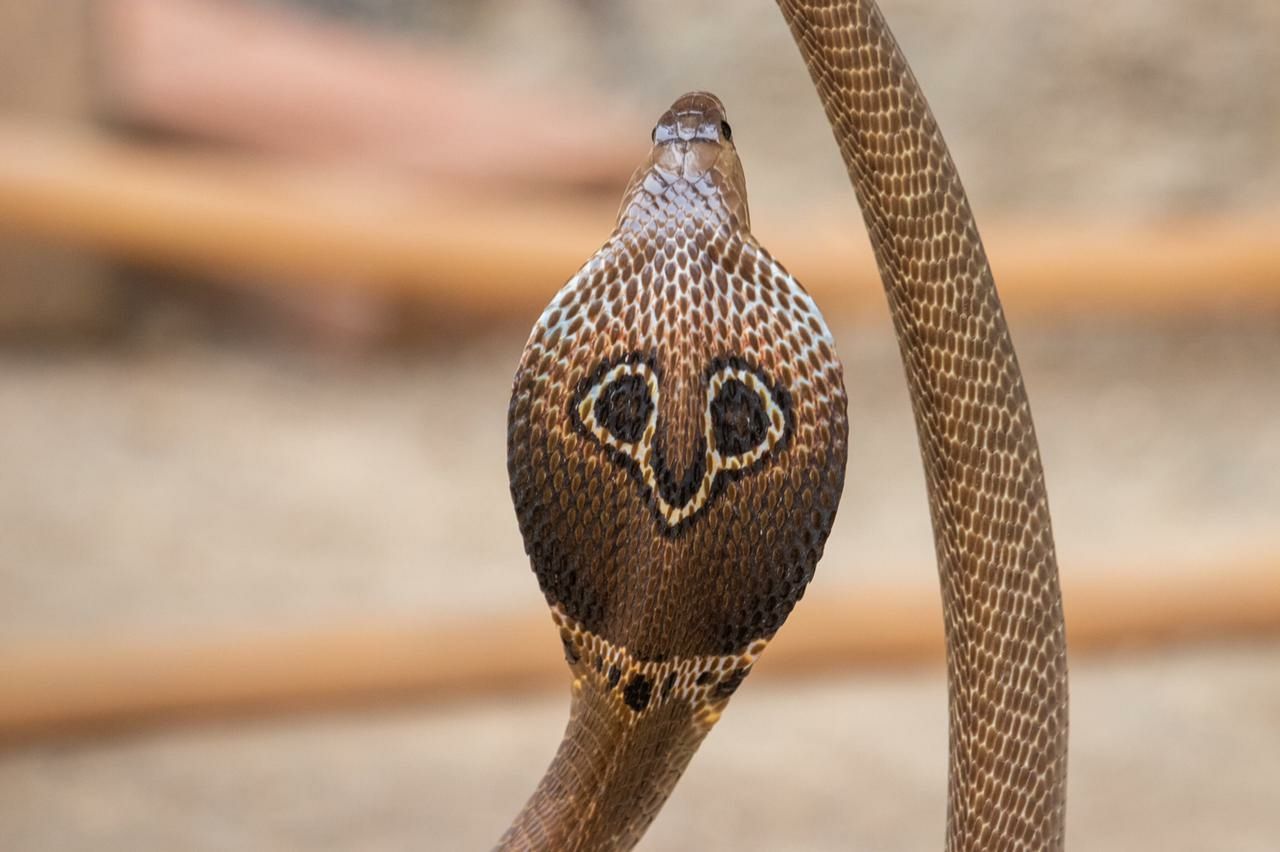
The back of the hood, with the spectacle mark. Photo: Chayant Gonsalves, CC BY 4.0 Spectacled cobra Naja naja
- Length
- 1 to 1.5 m. Some reach 2 m.
- Look
- Smooth, shiny scales. Brown, wheat, grey or black. When it feels danger, it lifts the front of its body and spreads a hood. Most have a mark like a pair of spectacles on the back of the hood. Some have no mark.
- Where
- Rat holes, termite mounds, piles of stones, fields and the edges of villages.
- Active
- Day and evening.
- The bite
- Attacks the nerves. Pain and swelling at the bite, then heavy eyelids, then trouble to swallow and to breathe.
- Mixed up with
- The rat snake, which is harmless. It is longer and thinner and has no hood.
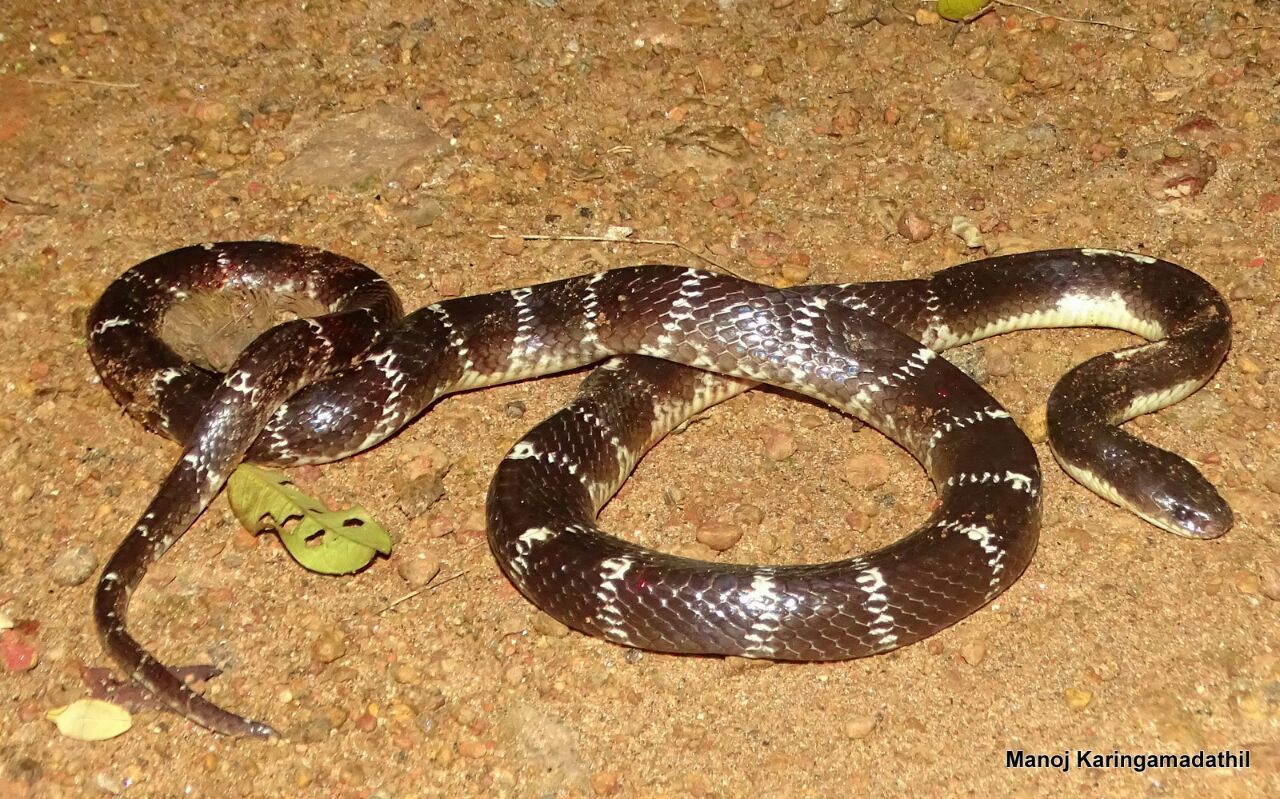
Thin white bands in pairs on a shiny dark body. Photo: Manoj Karingamadathil, CC BY-SA 4.0 Common krait Bungarus caeruleus
- Length
- About 1 m. Some reach 1.5 m.
- Look
- Shiny black or blue-black. Thin white bands across the back, often in pairs. The bands are clear near the tail and faint or absent near the head. The head is not much wider than the neck. A row of large six-sided scales runs along the spine.
- Where
- On the ground at night: paths, camp sites, the floors of huts, under pads and bags.
- Active
- Night.
- The bite
- Attacks the nerves. The bite gives little or no pain and no swelling, so people do not always know that they were bitten. Paralysis comes hours later. This is the snake that bites people who sleep on the ground.
- Mixed up with
- The wolf snake, which is harmless. Its bands are clearest near the head. The bands of the krait are clearest near the tail.
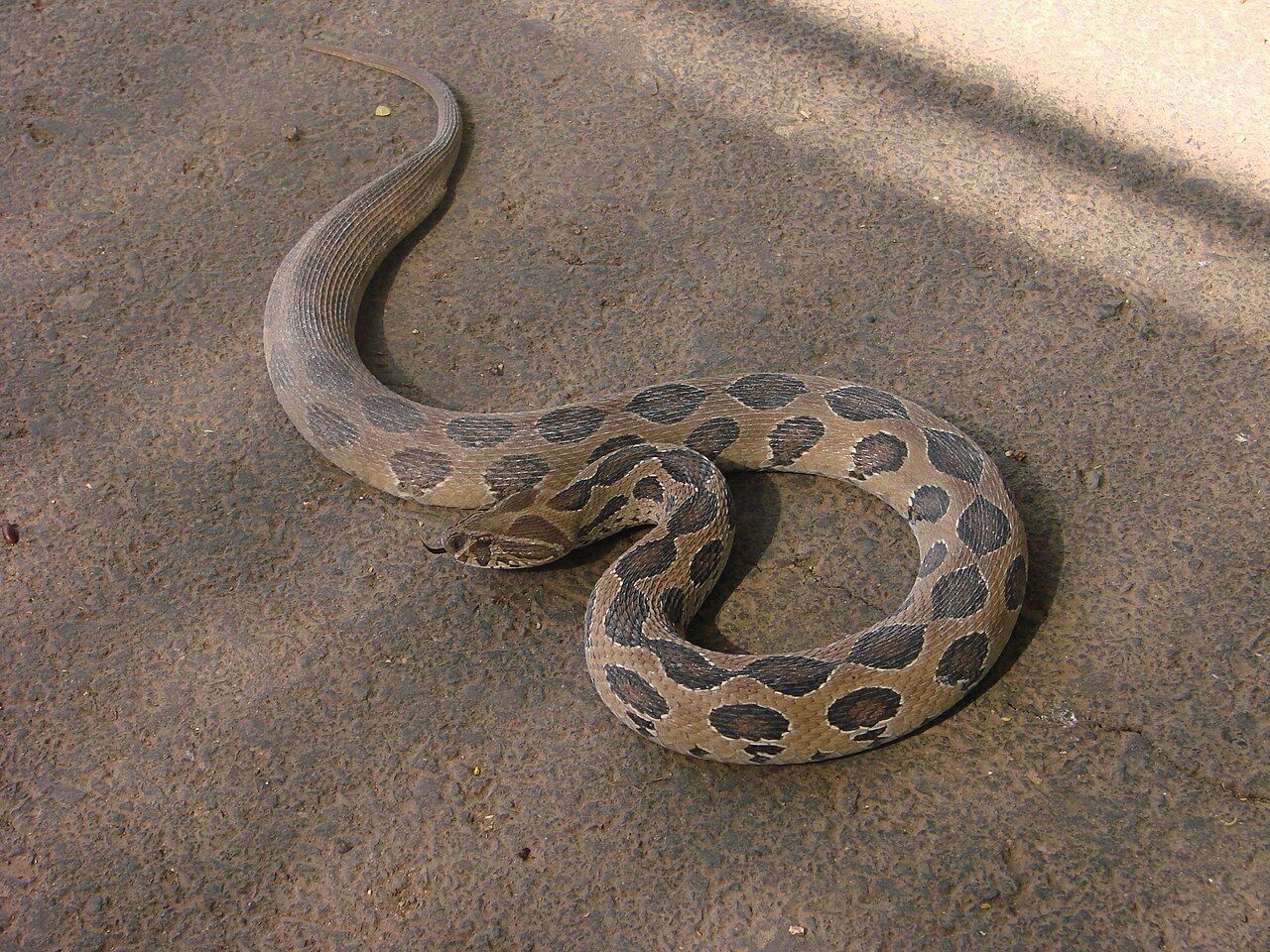
Rows of dark oval spots on a thick body. Photo: A. Chawla, CC BY-SA 3.0 Russell's viper Daboia russelii
- Length
- About 1 m. Some reach 1.5 m.
- Look
- A thick, heavy body and a flat head with the shape of a triangle. Brown or yellow-brown. Three rows of dark oval spots along the body, each with a black edge. Rough scales.
- Sound
- It hisses very loudly, like a pressure cooker.
- Where
- Grass, scrub, fields, and the grass and stones at the base of a crag. It keeps still and trusts its colour, so people step on it.
- Active
- Mostly evening and night. In cool weather also in the day.
- The bite
- Attacks the blood. Strong pain and fast swelling, then bleeding and damage to the kidneys.
- Mixed up with
- The common sand boa and young rock pythons, which are harmless. Their patches are not regular. The spots of the viper are in neat rows.
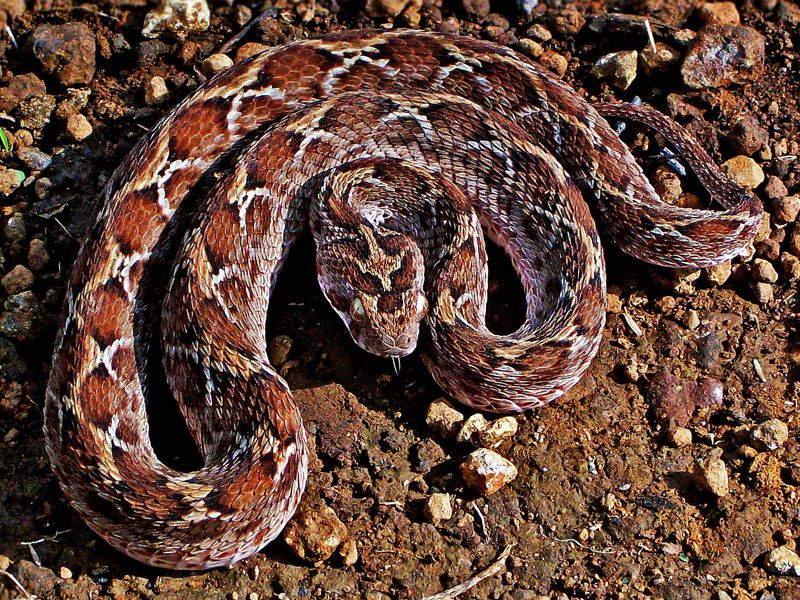
Pale wavy lines on the sides and a pale mark on the head. Photo: Shantanu Kuveskar, CC BY-SA 4.0 Saw-scaled viper Echis carinatus
- Length
- 30 to 50 cm. It is small.
- Look
- Sand, grey or brown. A pale wavy line along each side and pale spots along the back. A pale mark like a cross or the foot of a bird on the head. Rough scales and large eyes.
- Sound
- When it feels danger, it makes a double coil and rubs its sides together. This makes a sound like a saw.
- Where
- Dry, open, rocky ground. Under stones and boulders, in cracks and in dry scrub.
- Active
- Night, and evenings after rain.
- The bite
- Attacks the blood. Pain, swelling and bleeding that can go on for days.
- Mixed up with
- The common cat snake, which is harmless to people. It is thin, has a long tail and climbs bushes.
In the high Himalaya: the pit viper
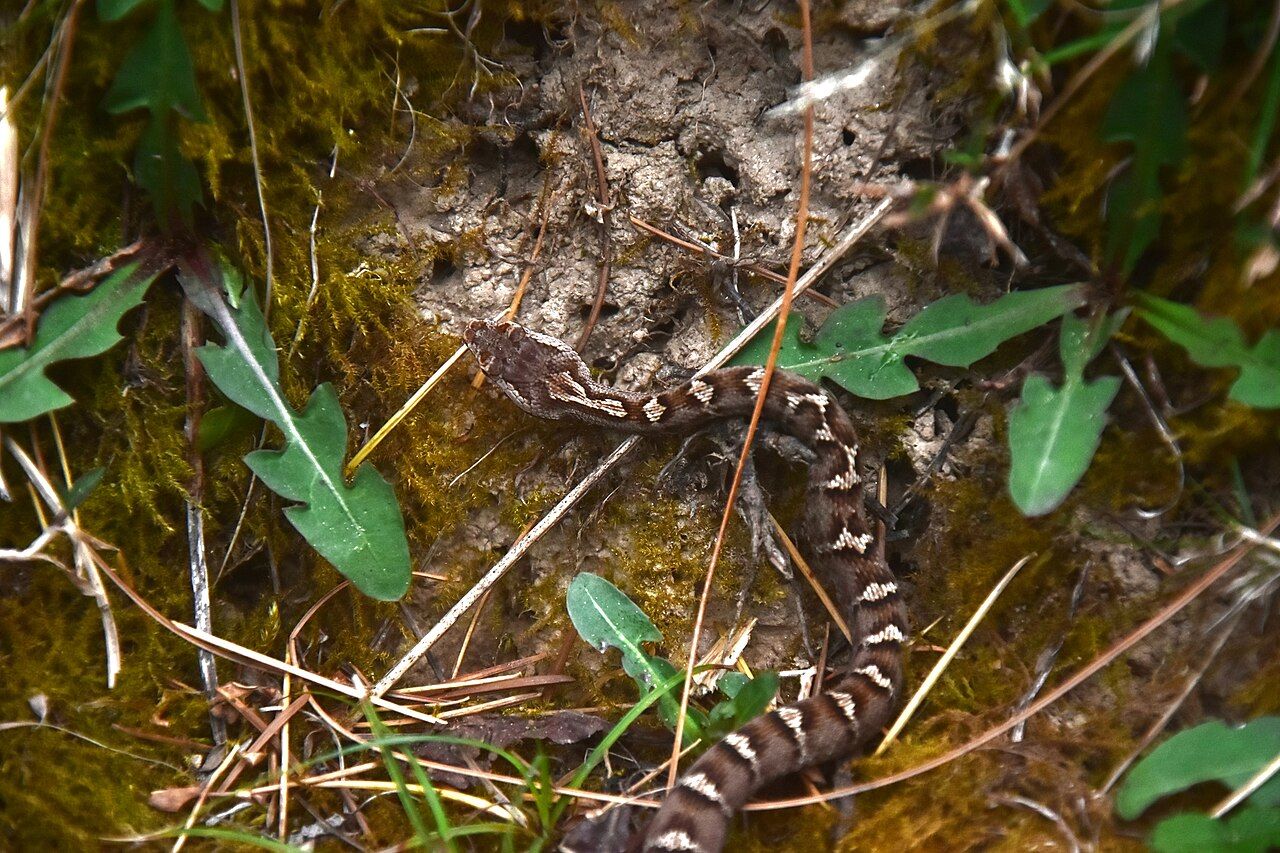
- The big four live mostly in the plains and the low hills. At Sethan and Rakchham the venomous snake to know is the Himalayan pit viper, which lives from about 2,100 m to 4,900 m.
- It is 50 to 80 cm long and brown, with dark bands or patches across the back. It has a small pit between the eye and the nostril. It hides under rocks, boulders and fallen wood, and moves mostly at night.
- A bite gives strong pain and swelling. Deaths are rare, but go to a hospital. In Ladakh and Spiti snakes are very rare.
If a snake bites
- DoMove away from the snake. Keep the person still and calm. Take off rings, watches and tight clothes. Hold the limb still with a splint or a sling. Go fast to a hospital that has antivenom, and carry the person if you can.
- Do notDo not cut or suck the bite. Do not tie a tight band. Do not put on ice or herbs. Do not try to catch or kill the snake. Do not wait for signs to show: with a krait there can be no pain at all.
- Tell the doctorThe time of the bite and what the snake looked like, or show a photo if someone took one from a safe distance.Source: World Health Organization, snakebite treatment
How not to meet one
- Look before you put a hand into a crack, on a ledge above your head or under a boulder.
- Use a light after dark and wear closed shoes on the walk in and out. Most bites are on the foot and the ankle, at night.
- Lift pads, bags and shoes with care if they were on the ground, and shake them out. Do not sleep on the ground in the open.
- Snakes are most active in the warm months and in the monsoon. In the cold months of the main season in the south and west you will see few.
Leopards and bears
You will most likely never see one. They are here so that you know the animal, its signs and the places and hours to take care.
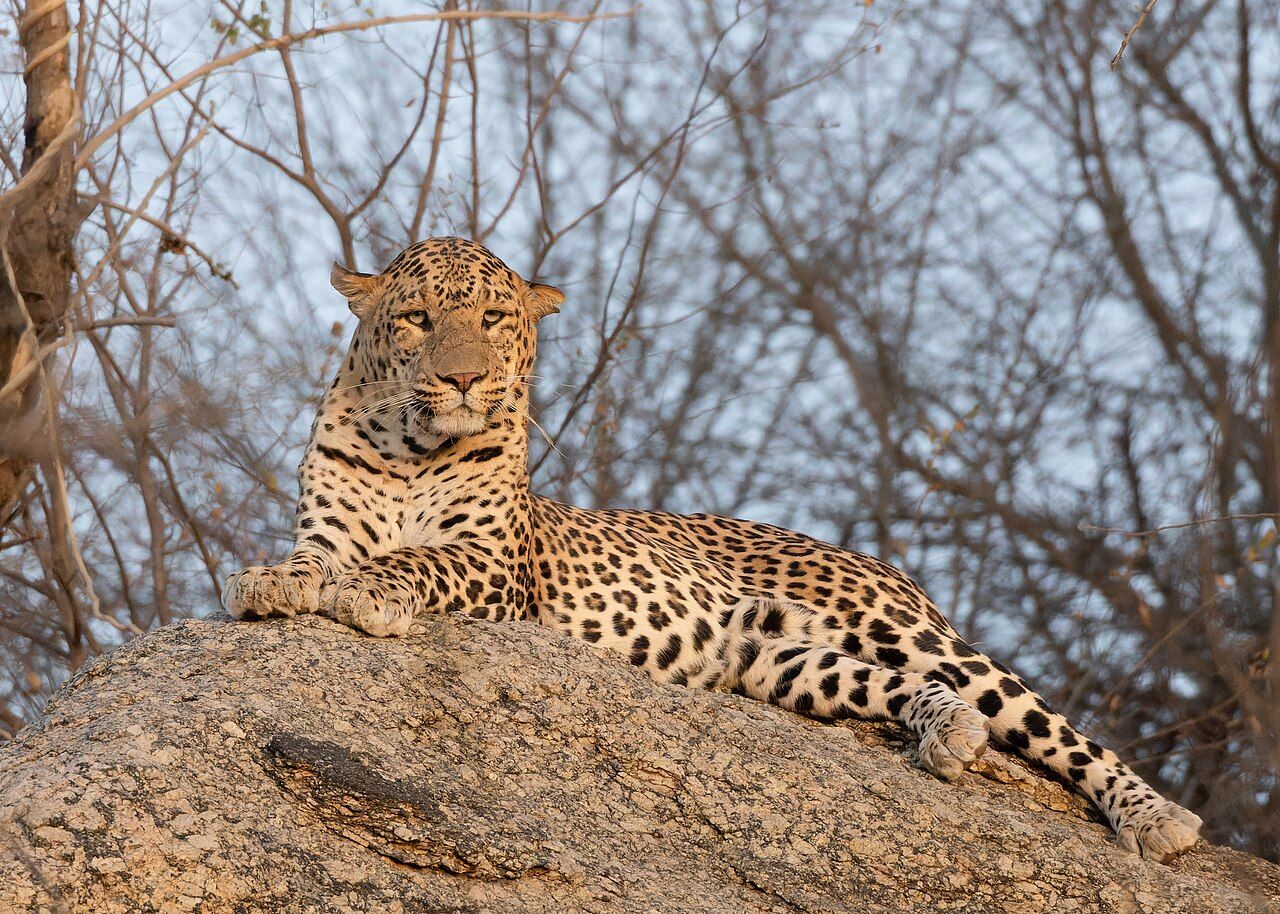
A leopard on a granite hill at Jawai, Rajasthan. Photo: Tisha Mukherjee, CC BY-SA 4.0 Leopard Panthera pardus fusca
- Size
- The body is 1 to 1.4 m long, with a tail almost as long. 30 to 70 kg.
- Look
- Yellow-brown with black rings (rosettes) that have no spot in the middle. A long tail that curls up at the end.
- Where
- Rocky hills with caves and scrub, and forest edges near villages. On our list: Hampi and Anegundi, the crags near Bengaluru, Sinhagad, Belapur, Dhauj and the forests near Manali.
- Active
- From dusk to dawn. In the day it rests in caves and below boulders.
- Signs
- Round paw marks 7 to 9 cm wide with four toes and no claw marks. Droppings with hair and bone in them. Scratch marks on tree trunks. Loud alarm calls from langurs.
- Risk
- A leopard keeps away from adults in the day. Attacks are mostly at night, on people who are alone, bent low or asleep in the open, and on children.
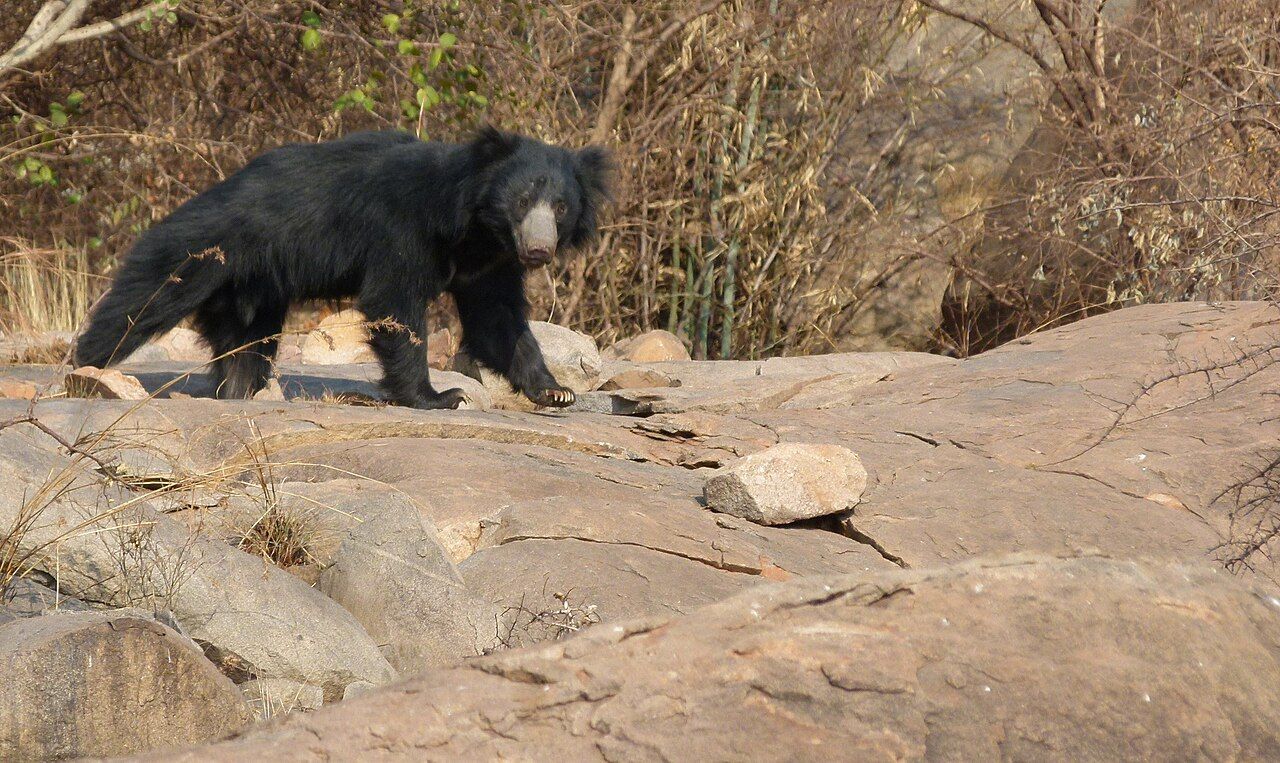
A male sloth bear on the rocks at Daroji, near Hampi. Photo: L. Shyamal, CC BY-SA 3.0 Sloth bear Melursus ursinus
- Size
- 1.4 to 1.9 m long. 55 to 140 kg.
- Look
- Long, rough black hair. A long pale nose. A white or cream V on the chest. Long curved claws.
- Where
- Dry rocky hills and scrub in the south and centre of India. On our list: Hampi, Badami and the crags near Bengaluru. It rests in caves below boulders.
- Active
- Mostly dusk, night and early morning.
- Signs
- Termite mounds that are dug open. Dark droppings full of seeds and insect parts. Paw marks with long claw marks.
- Risk
- It does not see or hear well, so people come upon it at close range, and then it attacks to defend itself. It is the bear that hurts most people in India.
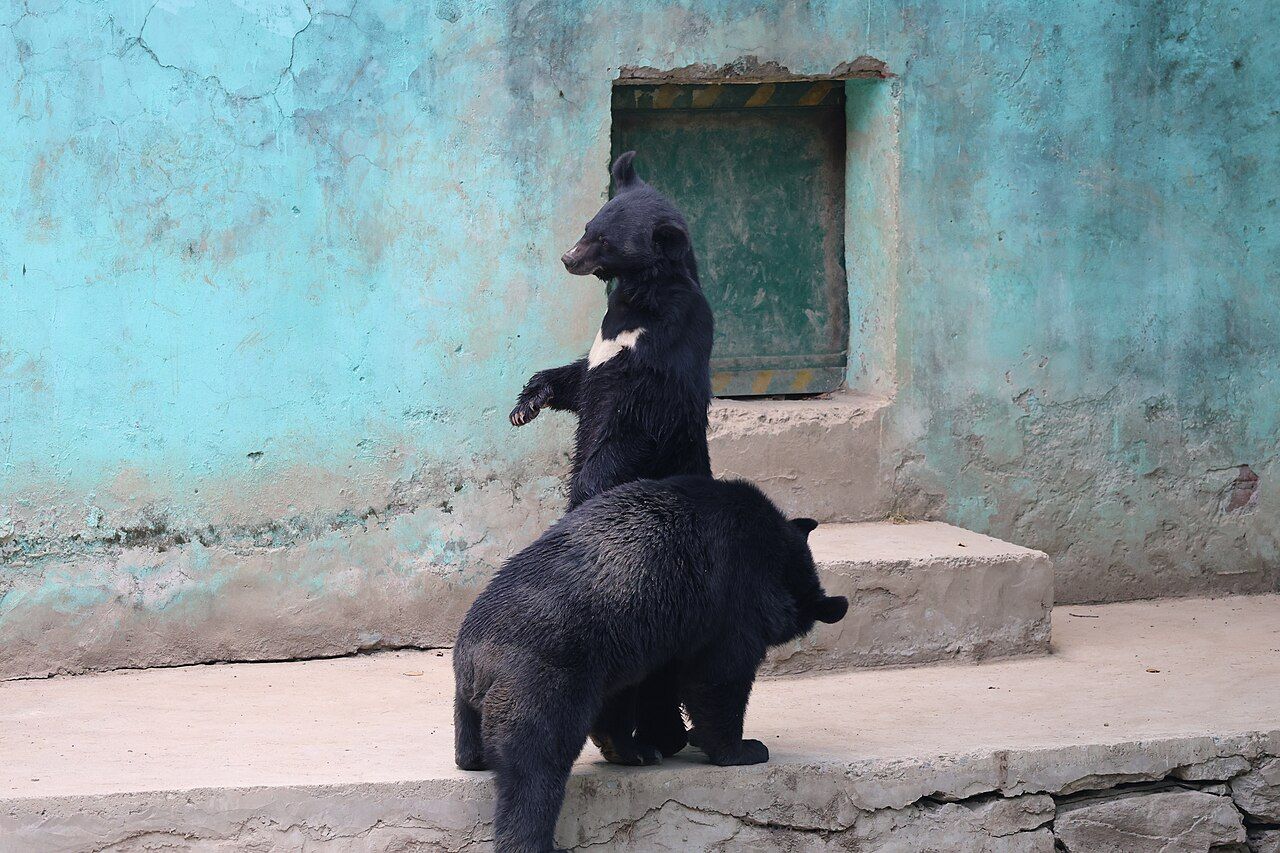
Himalayan black bears in a zoo. The bear that stands shows the pale chest mark. Photo: Ganesh Mohan T, CC BY-SA 4.0 Himalayan black bear Ursus thibetanus laniger
- Size
- 1.4 to 1.7 m long. 90 to 180 kg.
- Look
- Smooth black hair, large round ears and a cream V on the chest. A pale chin.
- Where
- Forests of the Himalaya up to the tree line. On our list: the forests near Sethan and Manali, and the Baspa valley at Rakchham.
- Active
- Dawn, dusk and night. In autumn it comes down to orchards and maize fields.
- Risk
- Most attacks occur when a person comes upon a bear in thick forest or in a field, mostly from September to November.
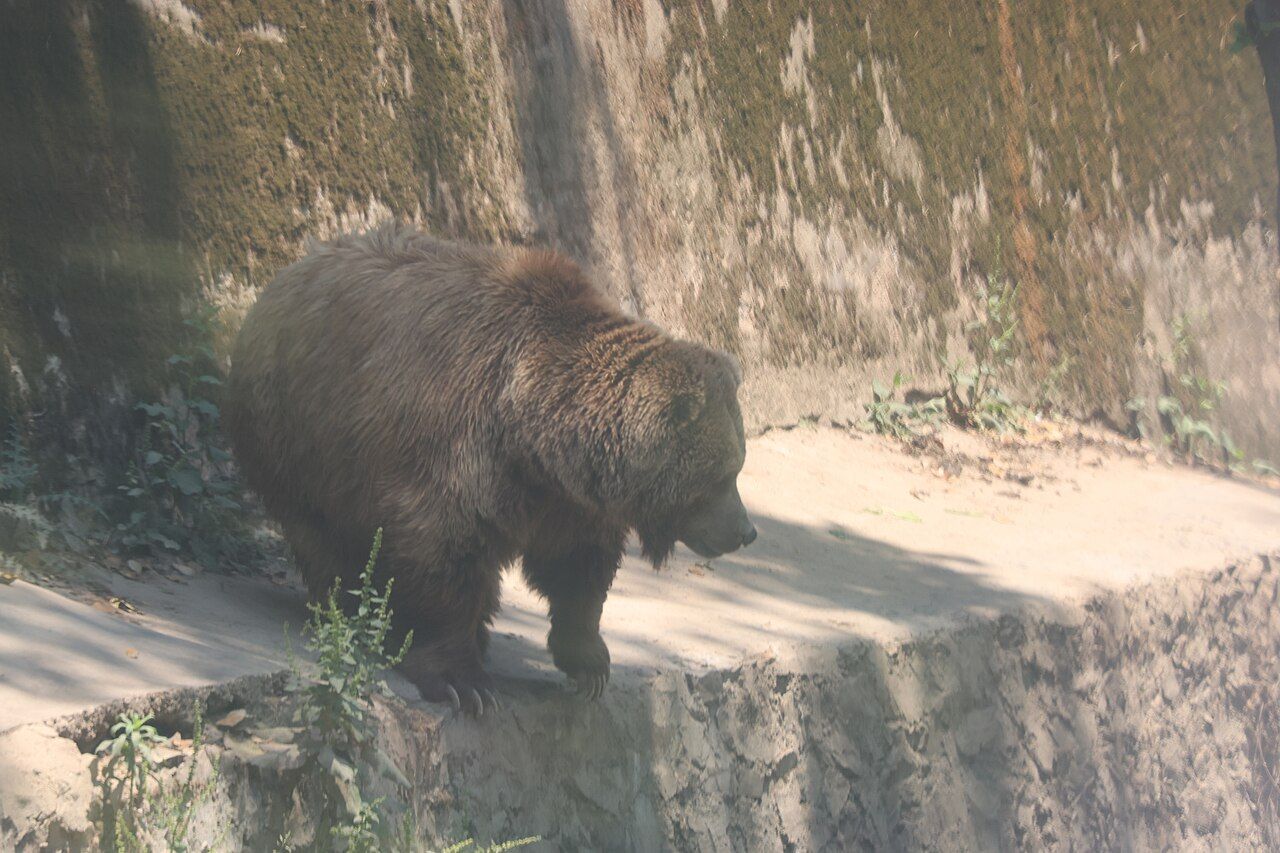
A Himalayan brown bear at the Kufri zoo, Himachal. Photo: Ganesh Mohan T, CC BY-SA 4.0 Himalayan brown bear Ursus arctos isabellinus
- Size
- 1.5 to 2.2 m long. It is the largest animal in the high Himalaya.
- Look
- Sand-brown or red-brown hair and a hump at the shoulders. No chest mark.
- Where
- Open slopes and meadows above the tree line. On our list: the Suru valley, and the high ground above Rakchham and Chitkul.
- Active
- From spring to autumn. It sleeps through the winter.
- Risk
- It comes to camps and grazing huts for food. Attacks on people are rare. Keep all food shut away at camp.
Rock bees
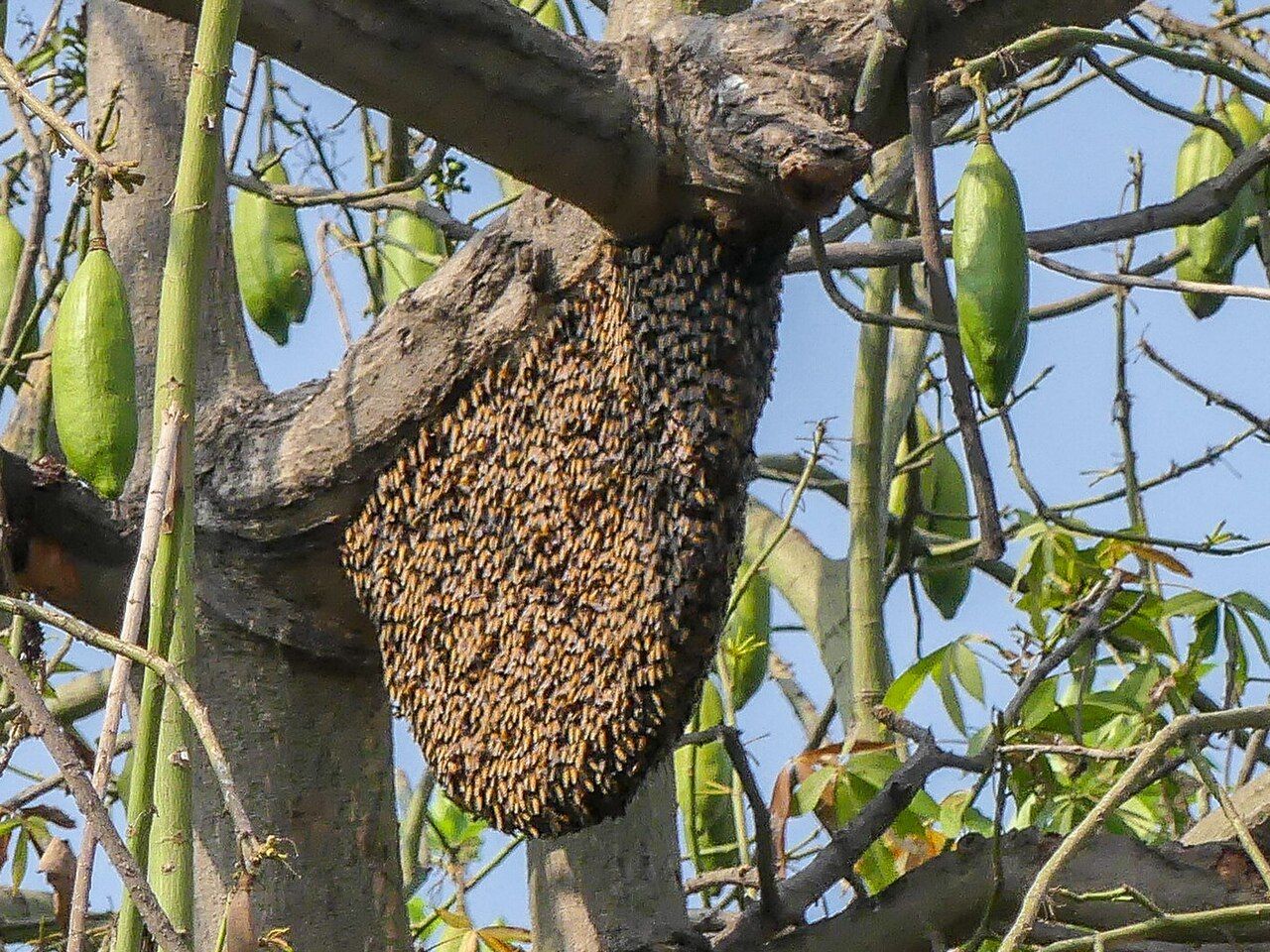
- How to know themThe rock bee makes one large comb in the open, up to 1 m across. It hangs below an overhang or a roof on a cliff, or from a high branch. A dark curtain of bees covers it. Look up at the wall before you start a route.
- What starts an attackSmoke, perfume, loud noise and stones. Do not climb a line that goes near a comb.
- If they attackCover your face and go away fast, a few hundred metres or into a car or a building. Do not hit at them. If you are on a rope, your partner must lower you at once.
If you meet a leopard or a bear
- BeforeDo not walk alone at dawn, at dusk or at night. Make noise in forest and tall scrub, so that the animal hears you first. Do not go into a deep cave below a boulder. Keep food packed, and do not sleep in the open.
- A leopardDo not run and do not bend down. Face it, stand tall, keep the group together and go back slowly. Keep children next to you.
- A bearDo not run. Speak in a calm voice and go back slowly, and give it a clear way out. Keep far from a mother with cubs.
- If a sloth bear makes contactPeople who study these attacks say: lie face down, cover the back of your neck and your head with your arms, and keep still until it goes away.
What lives at each area
Each area page has a part named "Wildlife precautions" with the animals on record there.